
Portable power stations have become the best energy solution for travel enthusiasts. The clean and noiseless power supply promotes eco friendly traveling.
However, power stations’ battery lifespan is a major concern for most buyers. Many individuals find it tough to keep the battery running on long expeditions. For that, understanding the battery cycles is crucial. It will help you manage the power station’s battery health.
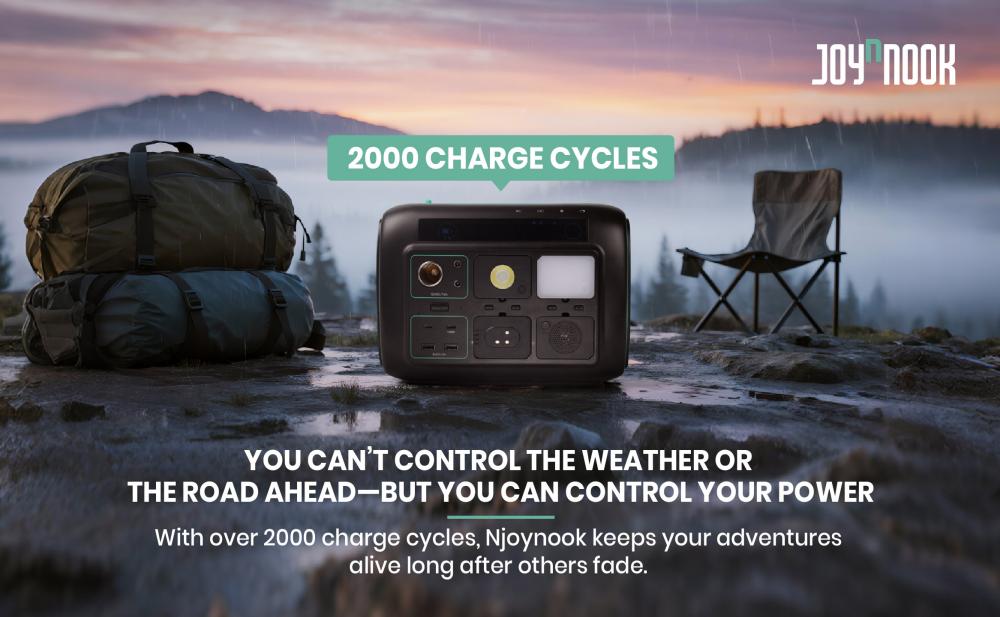
The NJoyNook portable power station offers a 512Wh battery that has 2000+ cycles. Likewise, battery cycles also play an important role in extending the battery lifespan and maximize benefits.
This article highlights what battery cycles are, how they impact power station life, and provide practical tips to extend battery life.
What is a Battery Cycle?
A battery cycle refers to the process of charging and discharging. One full charge followed by a full discharge is one cycle. For example, if you charge your power station to 100% and then use it until it's back to 0%.
The ideal depth of discharge (DoD) should be 20% 80%. If it exceeds 100%, the battery cycles and capacity decreases. Make sure your NJoyNook portable power stations’ battery does not fully depletes.
You can check the battery cycle anytime at the LCD Display Screen of your power bank.
How Cycle Count Affects Portable Power Stations’ Battery Lifespan?
The cycle count directly impacts the battery lifespan. For example, LiFePO4 batteries last longer than traditional lithium ion battries.
Lithium ion batteries have a limited number of cycles. It is estimated to be 500 to 1000 cycles, before capacity drops to 80%. On the other hand, LiFePO4 batteries last around 2000 to 5000 cycles.
The NJoyNook portable power station has a battery cycle of 2000+ cycles to 80%+ capacity. It uses a premium LiFePO4 battery that offers capacity and longevity.
Practical Tips to Extend Battery Life of Portable Power Station
Battery depletion is impossible to avoid. However, you can improve the battery lifespan by the following tips.
- Prevent Full Discharge: The DOD should never be 100%. Make sure the power station's battery level is between 20% to80%. In case of full drainage, the battery lifespan will be reduced to a greater extent.
- Don't Keep it Plugged in 24/7:Continuous charging can cause wear and tear on the battery. Hence, unplug it when the charging is full. Make sure to give it a break to avoid heating.
- Keep inModerate Temperature: Extreme temperatures are bad for the battery health, and Therefore, store your battery in a cool, dry place, away from direct sunlight or freezing temperatures.
BMS: Smart Feature for Portable Power Stations’ Battery Protection
Battery management systems are revolutionizing the battery cycle of portable power stations. For instance, NJoyNook’ power station comes with a high performance BMS that monitors battery health, and voltage.
It automatically monitors your battery’s life and disconnects automatically when the battery is full. In this way, NJoyNooks’ BMs avoid overcharging and over discharging.
You can also monitor the battery performance via app. This panel like control experience allows you to manage the battery's life cycle on your phone.
Conclusion
Battery cycles play an important role in power stations’ battery performance. With proper care and monitoring, you can extend its lifespan.
Always store your battery in a cool and dry place. Avoid exposure to extreme temperatures, as it can cause damage and faster discharge.
Modern portable power stations like NJoyNook offer high end battery management system. This system helps you monitor your battery’s performance and prevent overcharging and overheating.
Follow all these measures to enhance the overall battery health and lifespan. A healthy battery ensures reliable and constant power supply during outdoor expeditions.