
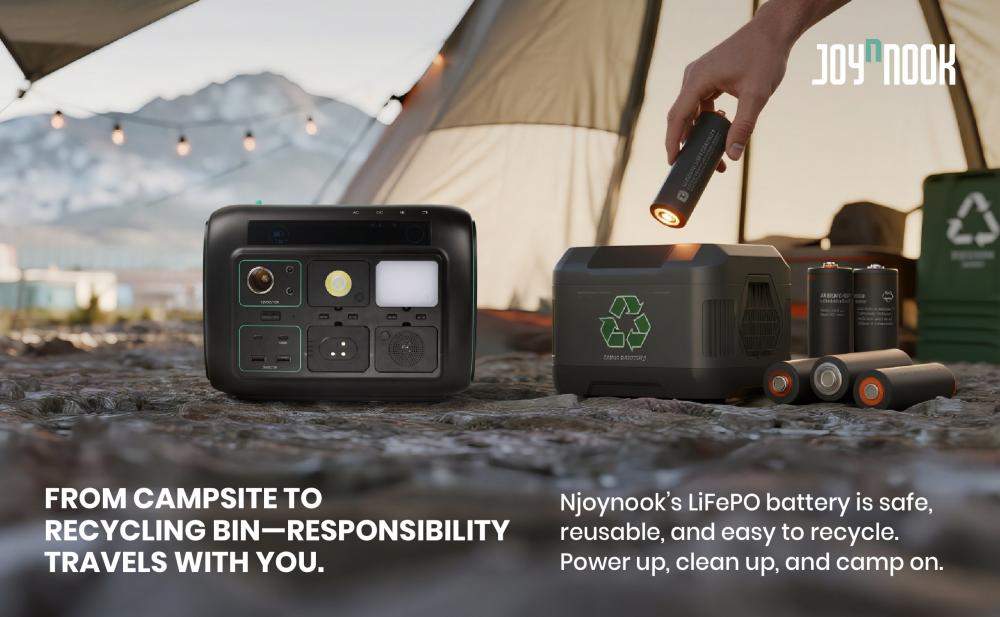
By 2030, global e waste will be 82 million tonnes, a contributing factor to environmental pollution. Therefore, e waste should be disposed of properly. The NJoyNook portable power station offers eco friendly operation, however, the old batteries must be handled with caution.
Its LiFePO4 battery needs recycling to eliminate the impact of harmful components. Improper dumping of worn out batteries will release flammable gases and highly toxic volatile compounds. Here, recycling offers an added advantage to protect the environment.
This article highlights how to recycle old power station batteries. It explains common mistakes and best practices for successful disposing while extending the power stations’ life.
Why Recycle Old Power Station Batteries?
Recycling those old batteries is a smart move for cutting down on environmental hazards. Here is a break down why it's important:
- Retrieving Valuable materials: LiFePO4 batteries in NJoyNook portable power stations are manufactured using lithium iron phosphate. On recycling them, you are able to draw out precious metals such as lithium, cobalt, and nickel to use once again in new products.
- Reduction in electronic waste: Electronic waste is a factual issue to the environment. When we recycle batteries we are saving a ton of that garbage in the landfill and saving our ecosystems.
Battery Disposal Mistakes to Avoid
Many individuals do not give proper thought to battery disposal. This leads to improper electronic waste organization which has adverse effects. Therefore, avoid following listed mistakes when disposing of old batteries.
- Discarding in normal garbage: Batteries have toxic chemicals like lithium, mercury and lead. Do not put them in common garbage cans. Before disposing of electronic waste, ensure that it is separated from regular waste.
- Storing permanently: While stored the contents of batteries may spill and ignite a fire, so do not store. It is also significant to recycle the battery immediately when it starts to degenerate.
- Violating local legislations: There are certain rules of e waste disposal in many states of the US. For example, the eCYCLE DC program in the District of Columbia is obligatory and requires manufacturers to support the process of recycling. Legal and financial sanctions can be imposed on any oversights.
How to Dispose of Your Old Battery?
- Check battery condition: Before disposing of, thoroughly inspect the battery. Check for wear or tear and any physical damage as it maylead to chemical leak.
- Contact certified recyclers:You can easily locate certified recyclers and hand over used batteries to them.
- Prepare for dropoff or mail back programs: Follow the guidelines for drop off or mail back programs. Also make sure to pack and label the battery properly.
- Use a safecontainer: Always place batteries in non metal containers. Plastic or cardboard boxes are a perfect and safe choice for placing old batteries.
Where to Recycle Your Old Batteries?
Try the following recycling options for safe battery disposal:
- Electronic stores: Many electronic stores have started offering recycling programs. So you can find one near you and get your old battery recycled.
- Municipal centers:Waste management facilities have designated drop off points for battery recycling.
- Manufacturer takeback options: Some manufacturers offer take back programs for their products. You can locate a nearby outlet or contact support for recycling drop off.
Conclusion
When selecting a portable power station, opt for environmental friendly alternatives such as Njoynook Portable Power Station. LiFePO4 batteries are eco friendly and can be recycled.
By properly disposing of the batteries, the toxic chemicals will not leak out. Otherwise they may result in burns, explosions and high carbon footprint.
By following above mentioned tips you can help in improving a more sustainable future. Smart recycling will increase your investment worth, encourage green practices and is non hazardous.